


Spring notes from the Commons.
Through the spring moths of March, April and May the sun was pretty much constant as opposed to 2024 which saw thick clouds and north-easterly winds. There were of course days where the cloudy cold conditions prevailed but overall it was a much improved spring this year. The following sightings are the main highlights as observed by Mark Clements and myself.
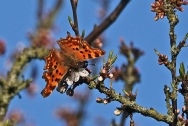
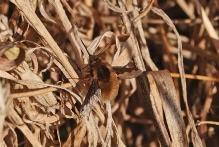
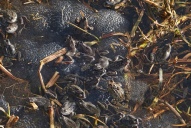
A Raven passed over (02 Mar) heading south-west and a Woodlark dropped in briefly, also a Red Kite was heading east. The first Red Admiral of the year was also spotted that day. Chiffchaffs were singing (05 Mar) up to a couple of weeks earlier than usual. The following day (06 Mar) another Red Kite headed east and up to 90 frogs were in the main pond along with the first spawn. Three Adders were observed (07 Mar) with Small Tortoiseshell and Peacock butterflies out (09 Mar). The Common Frogs had risen to over 100 in the main pond (11 Mar) and 25 were present in the new scrape, A Firecrest and five Common Snipe were present (25 Mar) and a Marsh Harrier flew north –east (26 Mar). Comma butterflies were also ‘on the wing’. As the month drew to a close (29 Mar) the warmer weather brought out the solitary bees and Dark-edged Bee-flies. Bee-flies are parasites of bees and wasps. Dark-edged Bee-flies lays eggs in a solitary bee’s nest and on hatching the larvae feed on the bee larvae store of pollen. Unusually in the insect world the bee-fly juveniles undergo a second metamorphosis that on emerging eat the bee grubs. A Tree Pipit headed west and the occasional Willow Warbler was singing, which was outnumbered by around 10 Chiffchaffs (30 Mar). A new hoverfly species was recorded for the site (31 Mar), the large rather spectacular bumblebee mimic, known as the Large Bearfly (Criorhina ranunculi).
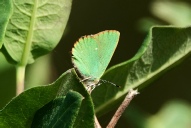
Two grass snakes and an Adder were spotted (01 Apr) as were two Firecrests and a Red Kite heading west the following day (02 Apr). The first Green Hairstreak butterfly was out (06 Apr) and around 15 Chiffchffs were present. The Orange-tip butterfly was first seen (17 Apr) along with Red Admiral. A Turtle Dove, which is now a rare sight, flew west over the Common (22 Apr) and an early Swift, also seen heading west (26 Apr). A new species for the site was the Large Pine Weevil, which was found in a patch of Wild Garlic (29 Apr). These weevils are a major pest and can cause serious damage to newly planted, immature forests by eating the bark of young softwood trees. The new scrape attracted a number of the Large Pond Skater (30 Apr) – an insect that is mainly found in south-east England.
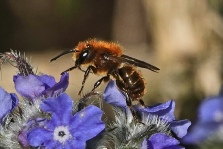
A Forget-me-not Shieldbug was seen on Green Alkanet and a Brassica Shieldbug was found on Hoary Cress (09 May). Both these insects have been found over a number of years in the same patches of plants. The first of the marsh orchids, the Narrow-leaved Southern Marsh Orchid, was flowering (10 May) in the central marsh and two Red Kites were spotted (13 May). A North East Norfolk Bird Club (NENBC) event was held (17 May) where members listed all bird species between dawn and dusk from one particular spot. The location was the top of Pill-box Hill and coincided with a cold northerly wind. By 12 noon 43 species had been recorded including a Hobby and an Egyptian Goose but as everyone was freezing the event was terminated at that point. For only the second time since the main pond was made permanent in 1983 a Hairy Dragonfly was seen patrolling the perimeter (19 May). These dragonflies are common in the Broads and along the coastal marshes but tend to be widely scattered elsewhere in Norfolk, although their distribution is increasing. The UK’s smallest Longhorn moth (3.5 – 5 mm long), the Speedwell Longhorn, which flies by day in sunshine, was also noted, resting on Germander Speedwell, its larval food plant. The dry spring seemed to be holding back many wildflowers and Green Alkanet was becoming a major source of nectar for many insects, particularly bees and butterflies. A very bright small bee, the Orange-vented Mason Bee was visiting (23 May) along with both Red and Blue Mason bees. The bees are known as Mason bees as they use mud or other “masonary’ products to construct their nests, which are made in naturally occurring gaps. Red Mason Bees are particularly attracted to Bee “hotels”. Two adult and three juvenile Treecreepers were present in the wooded area to the south of the Common (26 May) and the first of the year Emperor Dragonfly was noted. A particularly good sign was the presence of a number of almost mature Small Tortoiseshell caterpillars on a patch of nettles as these butterflies are in serious decline in the southern half of England. Three Mediterranean Gulls headed west (27 May) and a Whitethroat was seen also a Green Sandpiper and a Red Kite headed west (30 May). An Orange Ladybird and a small beetle known as a False Ladybird were also present. NENBC member, Brian Shaw, reported a Spotted Flycatcher from the Common (31 May).
Francis Farrow – Hon. Warden